MARCEL
VAN BEEK

VISUAL ARTIST

ABOUT MARCEL VAN BEEK

PERSONAL BACKGROUND AND CREATIVE APPROACH

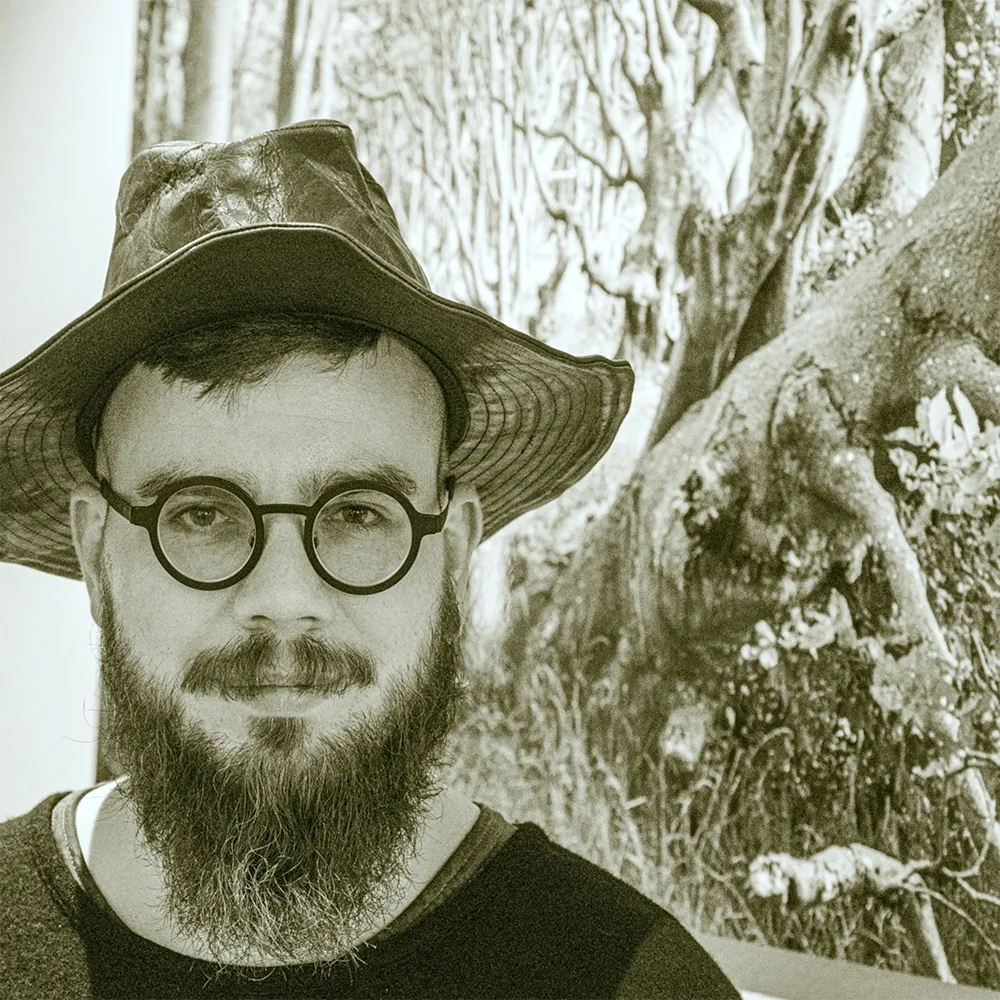
Marcel van Beek is a German visual artist born in Bonn in 1990 who has lived and worked in Leipzig since 2020. His artistic journey began with an early fascination for visual storytelling and the emotional resonance of images, an interest that gradually developed into a multidisciplinary practice spanning photography, painting and printmaking. Before beginning his academic studies, van Beek completed a one-year internship in set and costume design at the Junges Theater Bonn, gaining valuable insight into composition, atmosphere and visual narrative. From 2012 to 2017 he studied Fine Art at the Alanus University of Arts and Social Sciences, concentrating on painting, printmaking and photography. He completed his Bachelor of Fine Arts with distinction. During these formative years he also began presenting his work in exhibitions, establishing the foundation for an artistic practice that has increasingly focused on long-term photographic projects since 2022 while continuing to develop painting and graphic works alongside photography.

Painting provided Marcel van Beek with an understanding of composition, colour, symbolism and atmosphere that continues to influence every aspect of his creative practice. Photography gradually became the central medium through which he encounters the world beyond the studio, revealing unfamiliar forms, hidden structures and charged atmospheres within ordinary places and everyday surroundings. His process is based on sustained observation and attentiveness to changes in light, atmosphere, material and environment. Instead of searching for dramatic events, the artist pays close attention to quiet transitions, including the meeting points between vegetation and architecture, accumulations of water, weathered surfaces and visible traces of erosion, intervention and repair. Through this sustained approach, ordinary environments become sources of visual and emotional discovery.
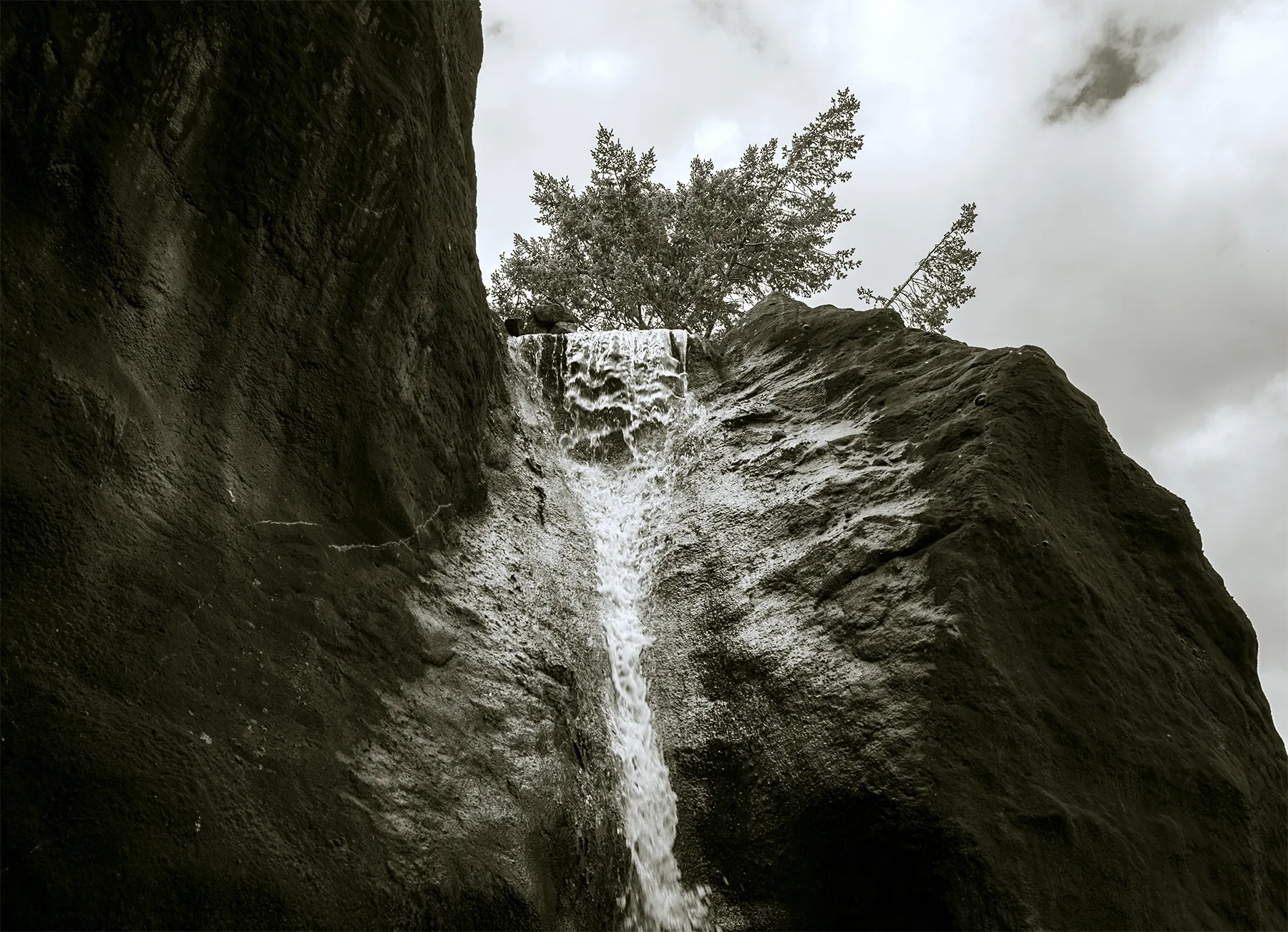
The artist works primarily in series, treating the camera as an instrument of concentrated perception. Lines, reflections, textures, shadows, sediments and spatial relationships are recorded through a disciplined, largely in-camera process in which composition, timing and the interaction of light and surface are resolved at the moment of exposure. In the studio, individual photographs are refined through careful tonal editing, selection and sequencing, allowing visual and thematic relationships to emerge across the series. Black and white is frequently chosen for its ability to distil form, structure and atmosphere, while colour is retained whenever it contributes essential material or emotional meaning. Alongside photography, van Beek continues to develop paintings and graphic works through a slower and more introspective studio practice using acrylic painting and printmaking techniques. These complementary disciplines explore symbolic imagery, layered colour relationships and psychological tension, creating a conversation between outward observation and inward reflection that defines the broader character of his artistic practice.

WORKS

LANDSCAPE, TRANSFORMATION AND SYMBOLIC PERCEPTION

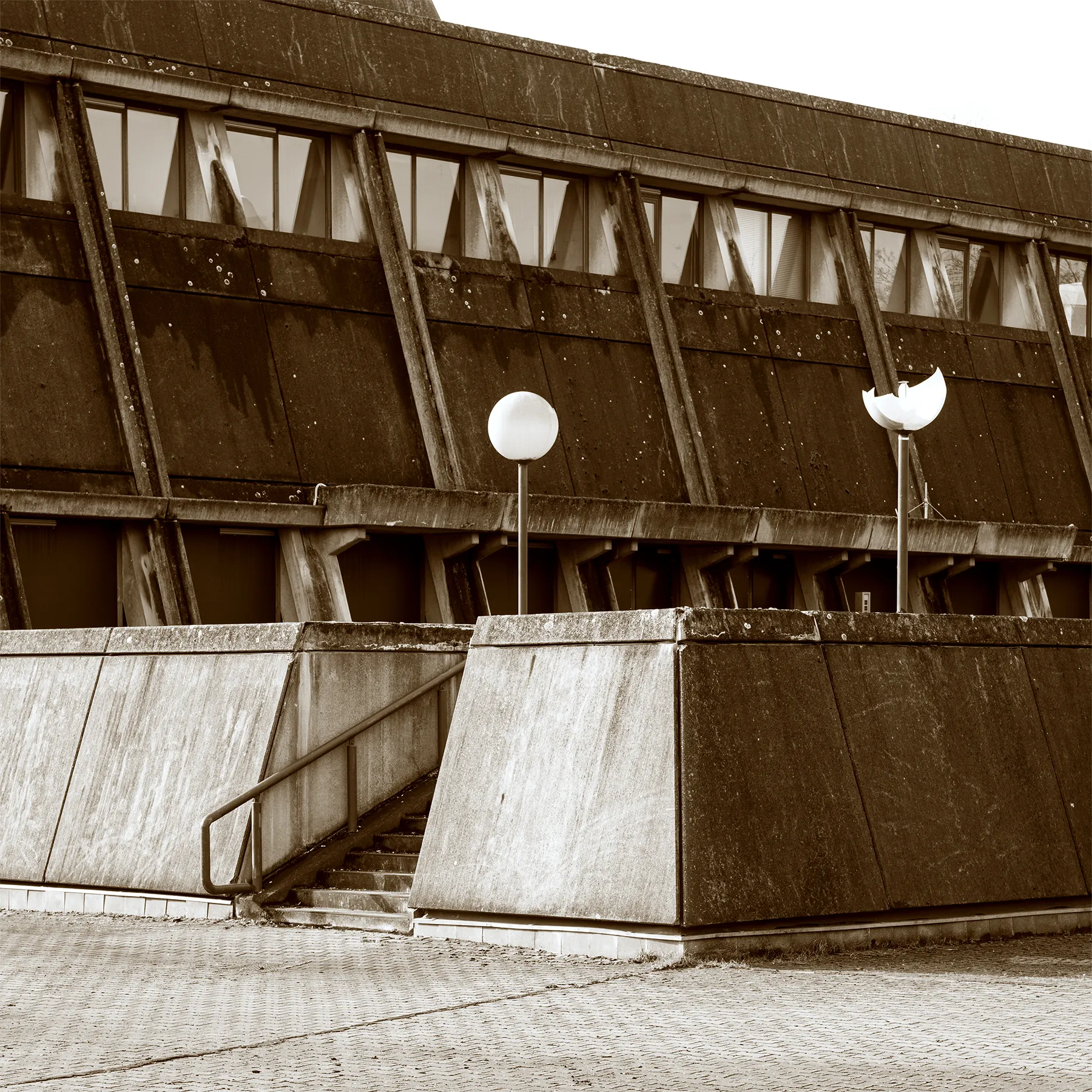
Marcel van Beek’s artistic work centres on the relationship between landscape, water, architecture, infrastructure and ecological transformation. His photographs approach stone, bark, concrete, sediment and water as micro-topographies: surfaces in which time, erosion, growth and human intervention leave visible traces. Post-industrial landscapes, changing urban environments, technical structures and locations shaped by climate change or shifting patterns of use appear throughout his projects. Rather than documenting these places in a purely descriptive way, he combines close, almost forensic attention to material evidence with an openness to symbolic, mythic and quietly spiritual resonance. His images invite viewers to consider familiar surroundings from fresh perspectives, encouraging sustained observation instead of immediate interpretation. This approach is reflected throughout long-term photographic series that explore recurring themes with consistency and depth while allowing each individual image to contribute its own distinct visual voice.

Formally, van Beek’s photography occupies a space between documentary observation and abstraction. Through precise composition, monochrome tonality, reflection and controlled visual reduction, familiar subjects are transformed into unfamiliar presences. Ambiguous scale and layered spatial relationships allow archetypal forms to emerge, moving the images between close observation, memory and mythic suggestion. Repetition within series strengthens these connections, allowing individual photographs to communicate with one another while expanding broader narratives concerning landscape, perception and change. His working method favours sustained attention over isolated moments, resulting in bodies of work that develop through precise in-camera decisions, patient observation and thoughtful sequencing rather than through the pursuit of singular iconic images. This measured process reflects his commitment to creating photographs that remain visually precise while retaining openness to multiple interpretations.

Painting and graphic work extend these investigations through a more symbolic and introspective perspective. Influenced by Romanticism and Symbolism, Marcel van Beek explores themes including human fragility, inner landscapes, mortality, nature and the search for hidden meaning. Acrylic painting and printmaking techniques allow him to build layered atmospheres in which colour, allegorical forms and psychological tension become central expressive elements. Together with photography, these works reflect an artistic philosophy concerned with thresholds between imagination and reality, beauty and disturbance, nature and technology, familiarity and estrangement. Rather than presenting fixed conclusions, the artist seeks to create images that encourage reflection and remain active in the viewer’s mind long after the first encounter. This balance between observation and ambiguity forms a defining characteristic of his practice, connecting external environments with inner experience while demonstrating a consistent commitment to thoughtful visual inquiry.

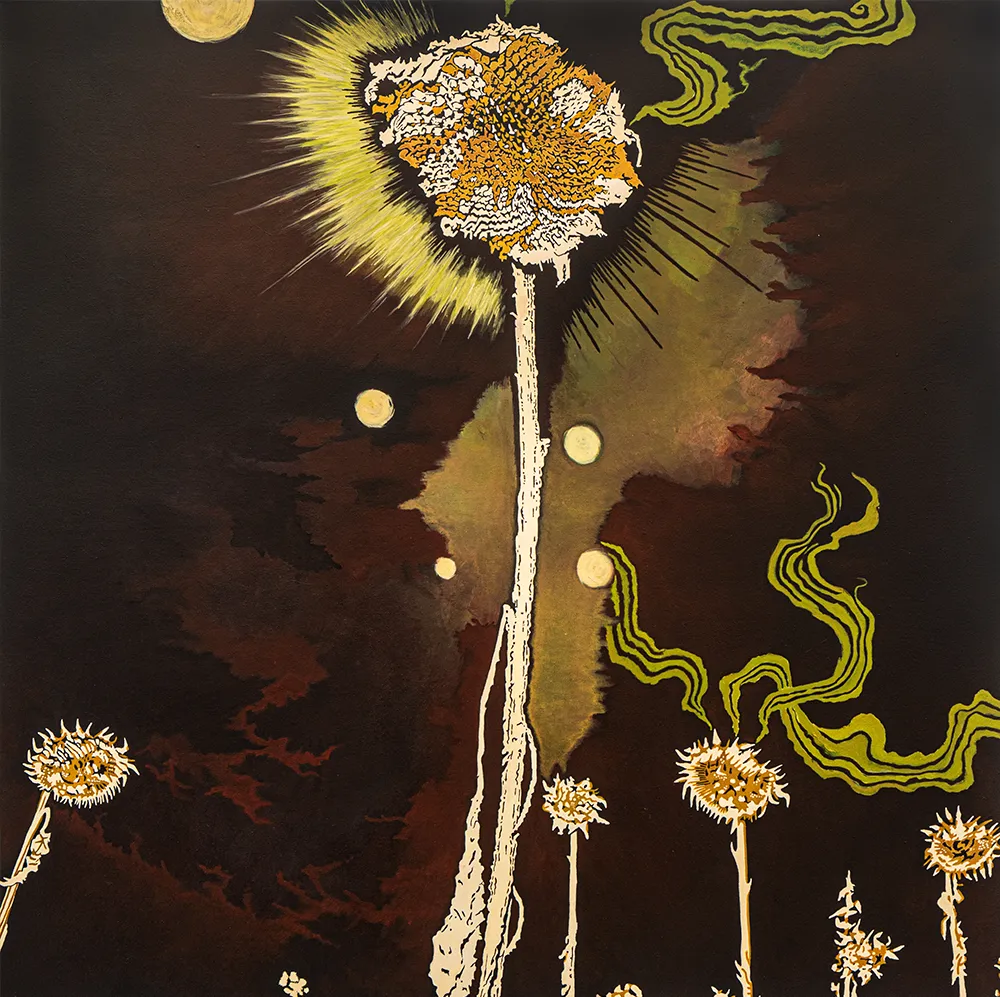
Les Fleurs du Mal III
Acrylic on canvas
100 x 100 cm
2023
Chlorophyll Trance II
Digital photograph
2026
Threshold Presence
Digital photograph
2026

ARTIST STATEMENT

OBSERVATION, TRANSFORMATION AND INNER LANDSCAPES

Photography has become my primary way of engaging with the world because it encourages me to look more carefully at places that might otherwise pass unnoticed. I am interested in moments of transition rather than spectacle: where vegetation meets architecture, where water gathers or recedes, where surfaces weather over time, and where traces of repair, erosion or intervention reveal changing relationships between people and their environment. I work responsively with a simple, mobile camera setup and rely on the discipline of the single in-camera exposure, remaining attentive to the precise convergence of light, surface and space. In the studio, post-processing becomes a process of distillation rather than correction: I refine tonal relationships, select images and build sequences until the photographs begin to communicate with one another. My intention is not simply to document a place, but to uncover the strange within the familiar — the point at which an ordinary surface, object or landscape begins to feel charged, ambiguous and newly present.

The questions that guide my work concern thresholds between reality and imagination, nature and technology, beauty and disturbance, and familiarity and estrangement. I am drawn to landscapes, urban environments and infrastructures because they reveal complex histories while remaining rooted in direct sensory experience. Rather than illustrating environmental or social questions directly, I approach them through close observation and material evidence, while allowing the image to retain a symbolic, mythic and at times quietly spiritual dimension. I believe the strongest image combines formal precision with symbolic openness. It should not provide a single answer or fixed interpretation. Instead, it should continue to unfold over time, allowing each viewer to bring personal memories, experiences and associations to the encounter. Ambiguity is therefore an essential part of my practice because it creates room for curiosity, contemplation and dialogue.

Painting and printmaking remain integral parts of my wider practice, offering a more introspective counterpart to my photographic work. While photography connects me with the outside world, painting offers a quieter studio environment in which emotion, imagination and inward experience can develop more freely. Influenced by Romanticism and Symbolism, I use acrylic painting and printmaking to explore allegorical imagery, psychological tension and layered atmospheres. Across both media I seek connections between inner and outer realities, recognising that observation and introspection continually inform one another. My goal is to create works that remain visually engaging while encouraging thoughtful reflection. I hope that each photograph, painting or graphic work offers an opportunity to slow down, to notice what is often overlooked, and to experience the richness, complexity and mystery that exist within ordinary places and human experience.

RESUME

EDUCATION, EXHIBITIONS, AWARDS, PUBLICATIONS AND MEDIA FEATURES

Education:

  • 2012–2017 – Fine Art studies in painting, printmaking and photography, Alanus University of Arts and Social Sciences, Alfter near Bonn; classes including Prof. Michael Reisch and Prof. Andreas Orosz.
  • 2017 – Bachelor of Fine Arts with distinction.
  • 2011–2012 – Internship in set and costume design, Junges Theater Bonn.

Selected Exhibitions and Presentations:

  • 2026 – YICCA Art Prize Final Exhibition, Centro Culturale di Milano, Milan.
  • 2026 – Worlds in View, ProfiFoto group exhibition during the Rencontres d’Arles OFF programme, Galerie Les Murs Blancs, Arles.
  • 2026 – Making Strange & Water – Sky, Praxis Gallery & Photo Arts Center, Minneapolis.
  • 2026 – World of Water, University of Applied Sciences Aschaffenburg.
  • 2025 – Planetary Boundaries, German Environment Agency, Dessau-Roßlau.
  • 2024–2025 – Urbs Accommodata, Leipzig University Library.
  • 2023 – Unsustainable Earth, Helmholtz Centre for Environmental Research (UFZ), Leipzig.
  • Several international juried group exhibitions including Minneapolis, Arles, Athens, Glasgow, Milan, Geneva and Berlin.
  • Earlier painting, graphic and interdisciplinary presentations including Galerie 52 at Folkwang University of the Arts, Science Centre Bonn and Artist Forum Bonn.

Selected Third-Party and Publications:

  • Marcel van Beek’s work has been selected for and published in numerous independently curated art and photography publications, including the YICCA 2026 Exhibition Catalogue, Dodho Magazine’s Portrait Award Photo Book 2026, WORLDS IN VIEW. ProfiFoto @ Arles 2026, Arts to Hearts Project’s 101 Art Book: Nature 2026, the Golden Shot Annual Photo Book 2026, and exhibition catalogues published by the Praxis Gallery & Photo Arts Center, SE Center for Photography, Solas / Shadow Gallery, Glasgow Gallery of Photography and prideART Berlin.

Selected Publications and Collections:

  • Portae Arcanae (2026, forthcoming)
  • World of Water (2025)
  • Übergänge (2024)
  • Naturraum :: Stadtraum (2023)
  • Unsustainable Earth (2023)
  • Schattenlicht. Werke 2012–2022

Works are held by Leipzig University, the Helmholtz Centre for Environmental Research (UFZ), and private collections in Bonn, Berlin and Leipzig.

Selected Media Features:

  • Two extensive Muse.World winner interviews (May and June 2026).
  • ProfiFoto, Issue 7/8–2026: Worlds in View – ProfiFoto in Arles, featuring Shadow I.
  • AATONAU, August 2026.
  • Main-Echo, April 2026: feature on World of Water.
  • Mitteldeutsche Zeitung, April 2025: feature on Planetary Boundaries at the German Environment Agency.
  • Leipzig University Magazine, March 2025: feature on the dialogue between art, science and sustainability.

Selected Awards and Recognitions:

  • YICCA Art Prize 2026 – Selected as one of 18 artists for the final exhibition and shortlisted for the international prize.
  • IMPRESSUM Photo Award / Appennino Foto Festival Open Call 2026 – Top 10 selection and exhibition in Abstract.
  • URBAN Photo Awards 2026 – Multiple selections in Spaces and Projects & Portfolios, including a 12-image series selected for the Mark Power Special Prize.
  • MUSE Photography Awards 2026 – Six Platinum and 27 Gold awards; three works selected for the virtual exhibition.
  • London Photography Awards 2026 – Three Platinum and 74 Gold awards; Celestial Calligraphy selected for the virtual exhibition.
  • Fine Art Photography Awards 2026 – Professional Winner distinctions in Conceptual and Nature (nominations).
  • PHI Photography Awards 2025 – Second and third places in subcategories, together with further selections and honourable mentions.
  • Golden Shot Photography Award 2026 – Category winner.
  • LensCulture Critics’ Choice – Editor’s Pick.
  • Further distinctions include the Exposure One Awards, Black and White International Photo Awards, Siena Creative Awards and the Schwalenberg Artist Residency Grant, where I placed third.

CONTACT DETAILS

GET IN TOUCH